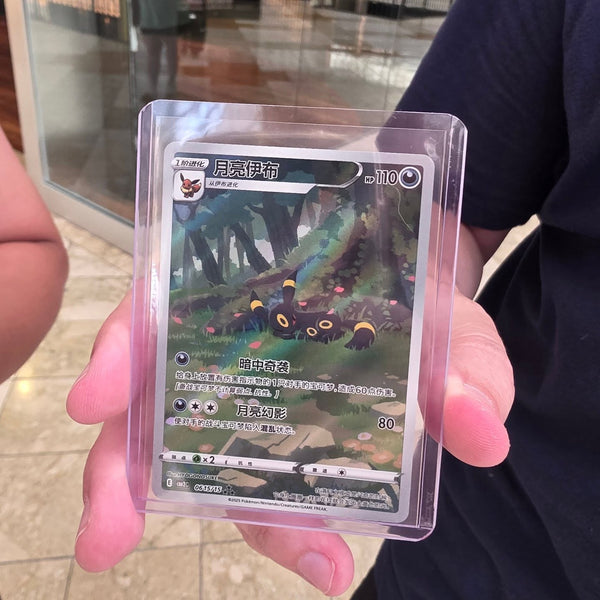
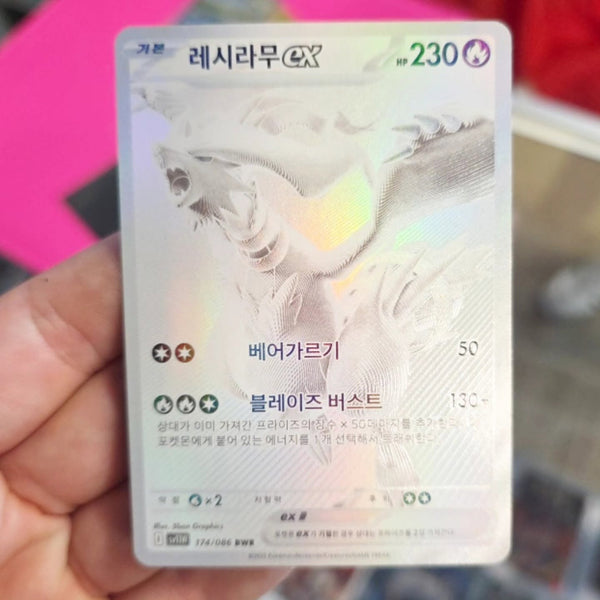
Counterfeit cards have never been more common, and the good ones can fool a quick glance. Our team checks cards every day before we buy them, and most fakes give themselves away to a few simple checks. Here is what we look for.
1. Compare it to a card you know is real
The single best test is a side-by-side comparison with a real card from the same set and era. Put them next to each other and look at the color of the card back, the border, the font, the energy or mana symbols and the set symbol. Fakes are often a little too dark, a little too washed out, or slightly blurry where the real card is sharp.
2. Read the text
Counterfeiters make mistakes real printers don't. Look for misspellings, odd spacing, the wrong font, attack or ability text that doesn't match the official card, a card number that doesn't exist in that set, or an HP value in the wrong style. Look the card up on the official card database or a trusted price guide and check every line against it.
3. Feel the surface
Many modern chase cards have a textured surface. Pokémon full arts, Illustration Rares and Special Illustration Rares, for example, have a fine texture you can feel and see when you tilt the card. Most fakes are smooth and glossy all over, or put the holo foil in the wrong places.
4. The light test
Real Pokémon and Magic cards are made with a thin dark layer inside the card stock. Shine a phone flashlight through the card in a dark room: a real card lets only a little light through, while many fakes glow brightly. It isn't proof on its own (some fakes pass, and some real cards vary), but combined with the other checks it is a strong signal. You can also look closely at the edge of the card for that dark middle line.
5. Use a jeweler's loupe
Real cards are printed with offset printing, which shows a pattern of tiny dots in rosettes under magnification. A cheap 30x or 60x loupe is enough to see it. Many fakes show solid color or the uneven dot pattern of a home or digital printer instead. This is one of the most reliable tests for Magic: The Gathering cards in particular.
6. Game-specific checks
- Yu-Gi-Oh! English TCG cards have a small hologram sticker in the bottom-right corner, plus a set code and Konami copyright line. A missing or flat, printed-on hologram is a red flag.
- Pokémon: check the set symbol, card number and rarity symbol in the bottom corner against the official set list.
- Magic: compare the back and the mana symbols closely, and use the loupe test.
7. Graded cards can be faked too
Counterfeit slabs exist. Always look up the certification number on the grading company's own website and make sure the card, grade and label details match exactly. Check the label printing, the hologram and the case itself for anything that looks off.
8. Watch out for sealed product
Resealed packs and boxes are a real problem. Look for loose, wrinkled or bubbly shrink wrap, glue on pack seams, and listings that are priced far below what everyone else charges. If a deal looks too good to be true, it usually is. At Cards2Go, our Japanese, Korean and Chinese product is bought by the case, never as loose boxes, so the chain of custody is clean.
Still not sure?
Bring the card into any Cards2Go store in Freehold, Paramus or Langhorne. We'll take a look for free, no appointment needed. And if you're looking to sell, see how selling works.